

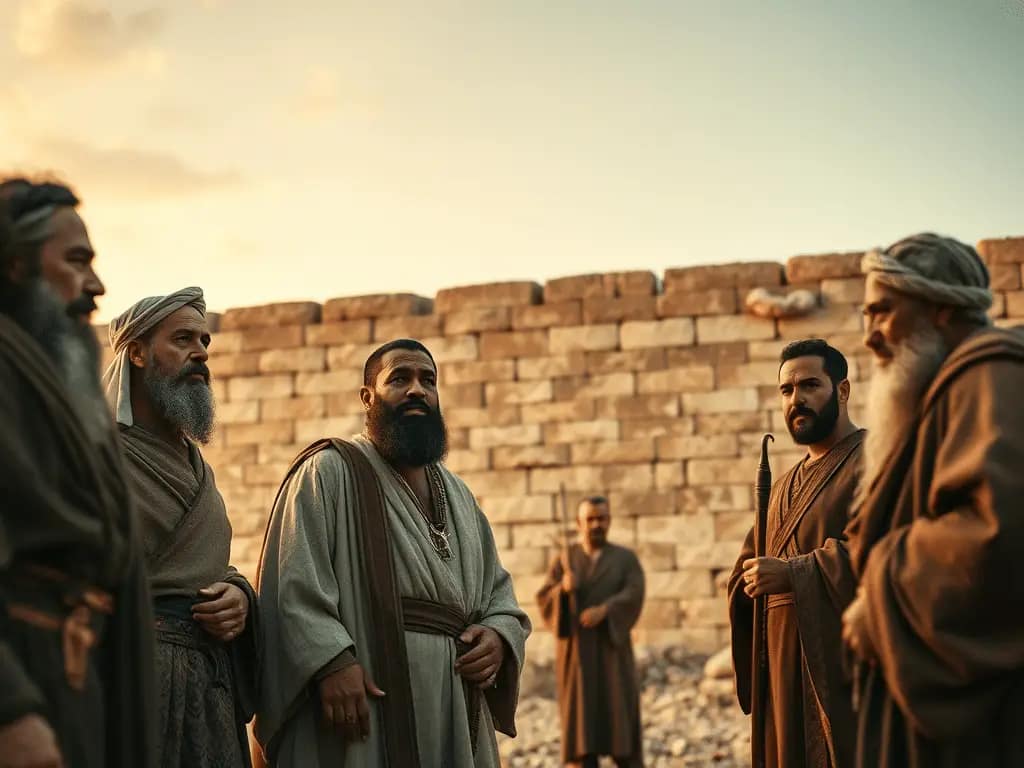
2 The seed of Israel separated themselves from all foreigners, and stood and confessed their sins and the iniquities of their fathers. 38 “Now because of all this, We are cutting an agreement in writing; And on the sealed document are the names of our princes, our Levites, and our priests.”
Nehemiah 9:2, 38, LSB
Success isn’t the end. It’s the threshold. Once the wall is built, once the vision is executed, once the mission is brought to completion—then comes the real test. Will it stand? Will it last? Will the people who built it maintain the fire, the focus, and the alignment required to preserve what they’ve created?
In Nehemiah 9, the people of Jerusalem don’t celebrate their accomplishment with self-praise or comfort. They respond to the completion of the wall with something far more demanding: confession. Not only of their own sins but of the sins embedded in their culture—the patterns of rebellion passed down through generations. There was no deflection, no historical erasure, no blame-shifting. They looked directly at their lineage and declared, “This is ours to own.”
And that’s the weight of leadership. Owning not just what you’ve done, but what’s been done before you. Recognizing that sin becomes culture when it goes unaddressed—and culture, left to run unchecked, becomes legacy. The people stood in full awareness of their failure. They confessed. They recommitted. They took action.
Conviction Demands Movement
The Law was read aloud—not once, but repeatedly. Hearing truth wasn’t a formality. It was fuel, and they couldn’t get enough of it. But they didn’t stop with understanding. They moved. They acted. They wrote and sealed a covenant—a formal declaration that their confession wasn’t emotional. It was structural. Permanent. Binding.
Leaders often confuse clarity for completion. A conviction is felt, a realization lands, a breakthrough arrives—and they expect the momentum to carry them forward indefinitely. But clarity, without discipline and consistency, fades fast. It creates the illusion of change but produces no lasting impact. Nehemiah’s people weren’t looking for a moment of inspiration. They knew their tendencies. They knew the cycle. And they refused to enter it again.
Conviction is only as strong as the covenant it creates. Without structure, conviction decays into memory. Without movement, even the sharpest insight becomes useless. The drift returns—and this time, it comes faster.
Coldness: The Silent Collapse
Leaders rarely fall in dramatic fashion. Most don’t crash—they cool. They disengage. Connection to purpose fades, daily alignment weakens, and before long, the work becomes hollow. Actions continue, but the power behind them disappears. Coldness doesn’t arrive with noise; it enters through neglect. Neglect of calling. Neglect of time with God. Neglect of the daily strength required to lead.
It starts quietly. The mission becomes mechanical. The purpose blurs. Influence stagnates.
Nehemiah’s people didn’t wait for that coldness to return. They had seen it, lived through its consequences, and chose a different path. Daily strength. Daily alignment. Daily standard. That was their response. And for leaders now, it must be the same.
Covenant Over Comfort
Leadership is a discipline. It is a daily choice to reflect, realign, and act—not reactively, but with intent. Encouragement, correction, sacrifice, courage—these are not mood-based responses. They are daily behaviors of leaders who refuse to drift. Leaders who understand that legacy isn’t left by accident—it’s forged through consistent execution, without excuse.
Nehemiah 9 is not a model of perfection. It’s a model of leadership that owns history, confesses failure, and commits to a new standard—one that’s written, sealed, and lived.
Let this be the daily commitment:
Praise goes up. Heat stays home. Service flows out.
Not as a mantra for the good days—but as a standard for every day. When the work is done, when success is achieved, when clarity arrives—covenant must follow. That’s how leaders finish well. That’s how missions endure.
Keywords
Nehemiah 9 leadership, daily leadership standard, faith and leadership, leadership accountability, spiritual leadership, leadership discipline, covenant leadership, leadership consistency, legacy leadership, confession and leadership, leadership drift, overcoming coldness in leadership, biblical leadership principles, sustainable leadership.