

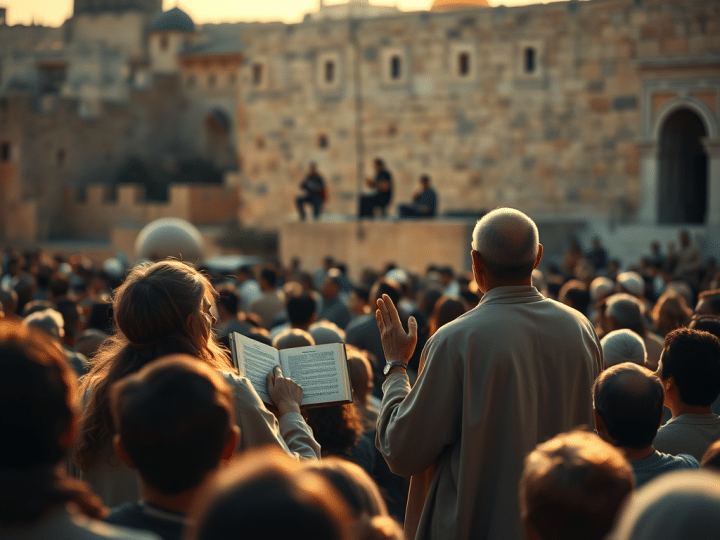
5 And Ezra opened the book in the sight of all the people for he was above all the people; and when he opened it, all the people stood up.
6 Then Ezra blessed Yahweh the great God. And all the people answered, “Amen, Amen!” while lifting up their hands; then they bowed low and worshiped Yahweh with their faces to the ground.
Nehemiah 8:5-6
Success has a way of testing a leader far more than failure ever could. When the work is done, when the wall is built, when the goal is met—it’s easy to believe the moment belongs to the one who led the charge. Easy to take credit, to seize recognition, to revel in the outcome. But Nehemiah did not do what most would have done.
After the wall of Jerusalem was rebuilt—a monumental effort requiring coordination, courage, and unshakable resolve—Nehemiah didn’t pause to gather accolades. He didn’t point to his leadership. He didn’t stand before the people as a hero. Instead, he brought out the Book of the Law, stood back, and invited Ezra to read it aloud. The people listened, wept, and turned their hearts back to God. This was not a moment of self-congratulation. It was a moment of consecration.
What could have been the climax of Nehemiah’s leadership became a turning point for something far greater. The wall was not the end. It was the platform for spiritual renewal. Leadership, at its core, is not about achieving goals for personal validation—it’s about guiding people back to the source of all strength, favor, and wisdom.
Leadership That Builds People, Not Just Walls
The pattern in Nehemiah’s leadership is subtle, but unmistakable. Vision. Encouragement. Strengthening. Leading. Rebuilding. Recommitting. Repentance. It’s not just a sequence—it’s a framework. And if that pattern is followed, the result is not just completed work, but transformed people.
Yet this pattern is easy to interrupt. Too often, leaders stop at rebuilding. They equate progress with completion and hold tightly to the control they feel they’ve earned. But true leadership doesn’t end at the finish line. It continues with the intentional handoff of responsibility, the elevation of others, and the refusal to take glory that does not belong to man.
Humility isn’t a soft virtue. It’s a daily discipline. It’s the awareness that nothing of lasting value is achieved apart from God’s provision. That every victory, every favor, every skill is given, not manufactured. The leader’s role, then, is not to stand in the light of success but to reflect that light upward—to honor the true King, Jesus, and to resist the temptation that so many earthly kings failed to overcome: the desire to claim glory that was never theirs.
This re-centering on humility reframes leadership. Boasting and arrogance have no place. Neither does hiding in failure or shrinking from responsibility. Leadership is not about seeking attention when things go well and disappearing when they don’t. It is about consistency. Owning the weight. Serving through it. Giving honor upward. Always.
Let Others Rise—And Let the Mission Outlast You
The challenge deepens as others begin to grow. As vision is cast, encouragement given, and people strengthened, a shift naturally occurs. Others rise. The leader becomes less essential in the day-to-day, and more strategic in presence. That moment can feel like a threat, like loss of control. But it isn’t. It’s the goal. Leadership is about releasing power, not hoarding it. About stepping back—not out—to allow others to step in and lead.
This is not about absence. Nor is it about dominance. It’s about proximity—leading from the center. Not barking orders from a distance or dragging people from the front, but standing close enough to advise and coach while leaving space for others to try, fail, try again, and find success on their own. That’s not abdication. That’s stewardship.
As followers mature, the role of the leader must change. That shift isn’t a loss of relevance; it’s a sign that the mission is growing beyond one individual’s reach. That moment should be a source of pride—not arrogance—a signal that leadership has been effective, not that control must be reasserted. When done right, leadership outlasts its visionary. It becomes embedded in those who were once led, now leading themselves and others.
Nehemiah understood this. He led the people to rebuild a wall, yes—but more than that, he equipped them with the Word. He gave them the tools to return to God on their own, to teach their families, and to live lives of integrity and character long after the wall was finished. That’s legacy. That’s multiplication.
The mark of leadership that endures is not what it builds with hands, but what it instills in people—the values, the truth, the direction that remains even when the leader steps away.
There is no room for pride in that process. Only discipline. Only humility. Only service.
Honor God in success. Own the burden in failure. Serve others without pause.
And let this principle govern the posture of every leader who seeks to finish well:
Praise goes up. Heat stays home. Service flows out.
Not just words to remember—but a standard to live by. Let them define what it means to lead with humility, strength, and purpose. Let them guide the leader’s steps beyond the wall, beyond the success, and into the kind of legacy that truly lasts.