

Lessons from Nehemiah 6
“Now it happened that when all our enemies heard of it, and all the nations surrounding us saw it, their confidence fell. And they knew that it was from our God that this work had been accomplished.”
Nehemiah 6:16, LSB
Leadership is not a performance. It’s not about being out front for recognition, nor is it about retreating to the back for comfort. Real leadership happens in the center—where the weight is carried, where the decisions are made, where the people live and work and struggle and grow.
In Nehemiah 6, this principle of leading from the center comes into full view.
When Pressure Mounts, Character Shows
As Nehemiah’s work nears completion, the opposition grows desperate. Tobiah, Sanballat, and Geshem no longer focus on the wall—they focus on Nehemiah himself. They summon him multiple times to meet them “on the plain of Ono” (v. 2), an invitation designed not for dialogue but for distraction and harm. Nehemiah discerns their intent and replies, “I am carrying on a great project and cannot go down” (v. 3).
This response is not arrogance—it’s focus and humility in action. Nehemiah refuses to be lured away from the people or the purpose. He recognizes that his leadership is not about elevating himself but about staying present in the work, in the trenches, in the heart of the mission.
The Temptation to Self-Protect
Later in the chapter, a more subtle attack comes—this time through fear and self-preservation. A false prophet urges Nehemiah to hide in the temple, claiming, “Let us meet in the house of God… because they are coming to kill you” (v. 10). But Nehemiah responds with clarity and courage:
“Should a man like me run away? Or should someone like me go into the temple to save his life? I will not go!” (v. 11)
Here, Nehemiah faces the critical test of positional leadership. He could have justified stepping back, retreating for safety, or shielding himself from the danger others face. But he doesn’t. Why? Because leadership, in his mind, demands shared risk, not privileged escape.
Leadership Principle: Lead from the Center
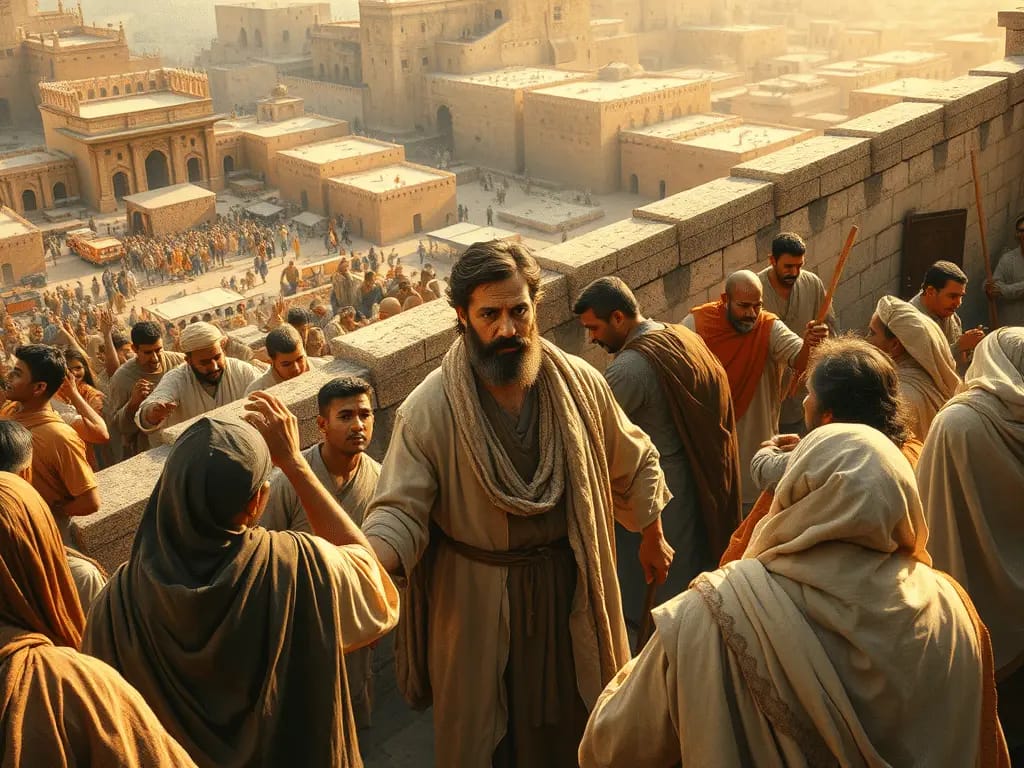
Nehemiah’s choices model what it means to lead from the center. He didn’t dictate from the front or hide at the back. He embedded himself among the people—close enough to coach those advancing, and close enough to strengthen those lagging. He led with visibility, accountability, and humility.
Leading from the center means guiding others through spaces you’ve already walked, while allowing them to step forward and lead, knowing they are supported—not controlled. It’s about being present enough to course-correct, and humble enough to let others grow through experience.
Nehemiah didn’t isolate himself in a palace or a high place. He was in the work, in the risk, and in the community. And for that, the people followed him—not because they were told to, but because they trusted him.
What It Means for Me: Shared Ownership, Shared Accountability
This passage convicts and directs me. It forces the question: Where am I standing? Am I too far removed—leading from a place of comfort, shielding myself behind my team? Or am I embedded at the center—in the pressure, in the conversations, in the mission?
If I expect my work team to engage colleagues they serve, I need to be present with those colleague’s leaders—not once, not occasionally, but consistently. I can’t afford to say, “Well, my team connects with yours.” That’s leadership from a distance. Leading from the center means I connect, I listen, I engage, I own.
In my family, this principle cuts even deeper. I can’t ask for sacrifices I won’t make. I can’t expect resilience I don’t demonstrate. I can’t seek guidance I won’t follow. To paraphrase an old truth: I must become what I want to teach others. Leadership is personal before it’s positional. It starts with ownership. It thrives with presence.
Legacy Starts at the Center
Nehemiah’s story doesn’t end with a finished wall. It ends with a fortified people—resilient, united, and confident in their purpose. That’s the kind of legacy I aim for. One that doesn’t hinge on how much I controlled, but on how well I equipped others. And that happens only when I lead from the center.
From the center, I can:
- Guide with wisdom.
- Support with presence.
- Empower with trust.
That’s where leadership becomes sustainable and scalable—not because people were pushed, but because they were invited and supported to step forward.
Nehemiah faced fear, opposition, and pressure—but he didn’t waver. He stayed centered—in the mission, in the community, in his leadership. That’s the model. That’s the aim.
Lead from the center. Stay close to the mission—and closer still to your people.